

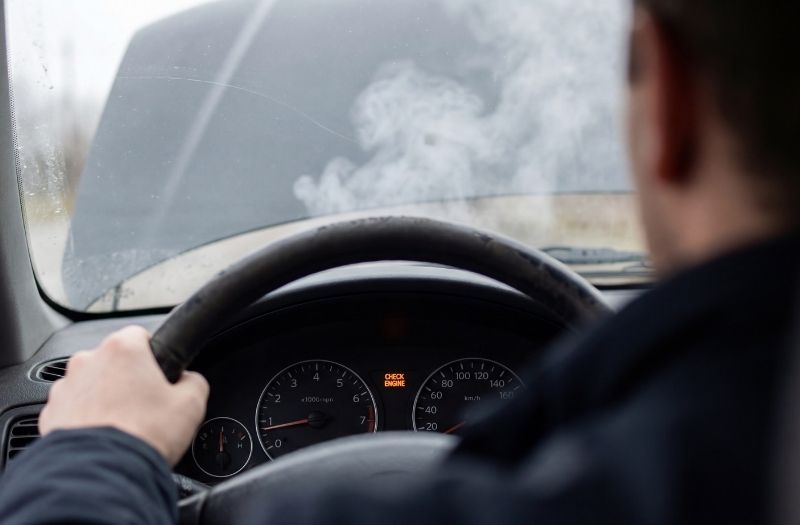
Your temperature gauge is creeping toward the red. Steam starts rising from under the hood. That sick feeling sets in fast, especially if you’re in heavy I-40 traffic with nowhere to pull off quickly. An overheating engine is one of the most damaging things that can happen to your car, and CAR FIX sees the results every summer across East Tennessee when drivers push through the warning signs instead of stopping.
The good news is that most cooling system problems give you warning before they cause serious engine damage. Knowing what to watch for can save you from a very expensive repair.
How Your Car’s Cooling System Works
Your engine produces a tremendous amount of heat every time you drive. The cooling system pulls that heat away by circulating coolant through the engine and out through the radiator, where it releases heat before cycling back through again. When any part of that loop breaks down, heat builds up fast.
Common Reasons Engines Overheat
Low or leaking coolant is one of the most frequent causes. Coolant does not evaporate on its own, so a low level almost always means a leak somewhere in the system. Low coolant leads straight to overheating.
A failing thermostat is another common culprit. The thermostat controls when coolant flows from the engine to the radiator. When it sticks closed, coolant stops circulating and the engine temperature climbs quickly, even on a short drive.
Radiator problems including clogs, leaks, or physical damage reduce the system’s ability to release heat. If your radiator is weak, it can’t keep up during heavy traffic or on the steep uphill climbs common around Cookeville, Crossville, and along the Smokies corrido
A broken water pump means coolant isn’t being circulated at all. This one can cause serious damage in a short amount of time if it fails completely while you’re driving.
Old or contaminated coolant loses its ability to protect the system over time. A regular coolant flush removes old fluid and replaces it with fresh coolant that can actually do its job. Most manufacturers recommend a flush every two to five years depending on the vehicle.
What to Do If Your Engine Starts Overheating
If your temperature gauge moves into the red or you see steam, pull over safely as soon as you can. Turn off the AC and turn on the heater, which pulls heat away from the engine. Do not open the radiator cap on a hot engine.
Once it has cooled down completely, check the coolant level. If it’s low, you likely have a leak. Do not keep driving until the system has been inspected. Continuing to drive an overheating engine can warp the cylinder head or crack the engine block, and both of those repairs are far more expensive than fixing the original cooling system problem.
When to Schedule Cooling System Service
If your temperature gauge runs higher than normal, your heater suddenly stops blowing hot air, you notice a sweet smell from under the hood, or you see coolant spots under your parked car, it’s time to have the system inspected. Any of those signs can point to a leak, a failing component, or coolant that needs to be flushed and replaced.
CAR FIX offers cooling system service, coolant flush, radiator repair and complete automotive service at all our East Tennessee locations, including Crossville, Campbell Station, Bearden Hill, Walker Springs, Western Avenue, Maryville, Cookeville, Oak Ridge and Farragut. If your temperature gauge is climbing or your car has been running hot, call a CAR FIX shop near you to schedule your cooling system inspection before a small problem turns into a big one.